EU Brussels Intensifies Push for Member States to Initiate Talks on Security Pact With UK

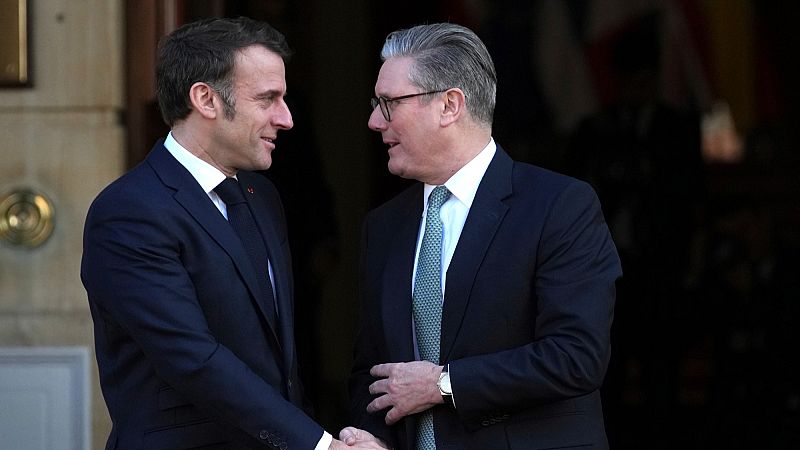
The European Commission is "making intense efforts" to obtain authorization from member states for negotiating a security and defense partnership with the United Kingdom, according to a senior EU official on Monday.
Securing this kind of partnership necessitates the collective agreement from all 27 member nations. However, certain countries, including France, have indicated their preference for integrating any security accord into an overall revision of relationships. This stance appears reminiscent of the Brexit principle that 'nothing is finalized unless every aspect is settled.'
For the European External Action Service (EEAS), enhanced collaboration on security and defense with the UK is essential due to the significantly altered geopolitical landscape, which starkly contrasts with the conditions at the time they signed the Trade and Cooperation Agreement (TCA). This agreement defines the nature of their partnership. Mr. Matti Maasikas, who oversees matters concerning Europe within the EEAS, communicated this message to legislators on Monday.
"What else can we do? Given that this involves the EU, you require a solid legal foundation to undertake actions. Since the foreign policy statement wasn’t included in the Trade and Cooperation Agreement, we must explore innovative methods and establish fresh grounds for collaboration," explained Maasikas to parliamentarians assembled in both Brussels and London at the European Parliament as part of the EU-UK Parliamentary Partnership Assembly.
The security and defense partnership might serve as one such tool, in my opinion, and I believe also according to the views of the High Representative.
"For that, the High Representative requires approval from the EU Council, which means getting consensus among all member states. Currently, intense negotiations are taking place to secure this mandate," he explained.
The British Prime Minister, Keir Starmer, who assumed office during the previous summer, has been advocating for a security and defense agreement. He mentioned earlier this month that such an accord should emphasize research and development, enhance military movement throughout Europe, foster increased cooperation on missions and operations, and promote industrial collaboration.
Nick Thomas-Symonds, who serves as Britain’s minister for EU relations, informed the same joint parliamentary assembly on Monday that the UK is "prepared to engage in negotiations." Additionally, Catriona Mace, the foreign and development policy director at the UK Mission to the EU, stated that "we shouldn’t limit ourselves to maintaining the current state of affairs."
We already collaborate extensively on shared security," she stated. "We need to increase our joint efforts.
Donald Trump's sudden move to initiate discussions with Russia about ending its conflict in Ukraine has hastened improved relations between the UK and European Union countries, leading to an increase in collaborative activities. Leaders' gatherings in different configurations Held during the last five weeks to debate European defense and security assurances for Ukraine.
Regarding this issue, France and the UK are more aligned, as they have both expressed willingness to deploy soldiers to Ukraine as part of a peacekeeping operation after a ceasefire agreement is reached between Moscow and Kyiv.
Kaja Kallas, the high representative who proposed an initiative for a coalition of willing nations to offer military aid totaling up to €40 billion in the near future to Ukraine, plans to visit the United Kingdom on Wednesday. During her trip, she is expected to have discussions with Chief of the Defence Staff Tony Radakin.
I am optimistic about engaging in highly productive conversations regarding all these matters," Maasikas stated to the legislators, "about the practical collaboration that continues, as well as broadening the foundation of this partnership.