How Long Should You Really Be Able to Stand on One Leg? Find Out by Age

- READ MORE: The crucial nutrient for shedding pounds is what you should focus on consuming.
Many believe that maintaining stability effortlessly on a single limb serves as an effective measure of overall well-being.
In fact, studies have shown that individuals unable to achieve this for over ten seconds may face a significantly higher risk of mortality within a decade.
However, currently, NHS researchers think they've identified the ideal duration for each age group to remain standing.
Maintaining balance on a single leg for over 40 seconds consistently is considered an important indicator of strength and agility in individuals aged 18 to 39, according to their claims.
On the other hand, individuals aged between 70 and 79 ought to aim for 18 to 19 seconds.
The reason why balancing on one foot serves as an indicator of fitness level is because It engages numerous parts of both the brain and the body simultaneously.
This assessment evaluates balance and strength—once these two attributes diminish, an individual becomes increasingly fragile, leading to a higher likelihood of suffering from devastating fractures due to falls.
According to the NHS For individuals aiming to test something, they should try standing on one leg while placing their hands on their hips.
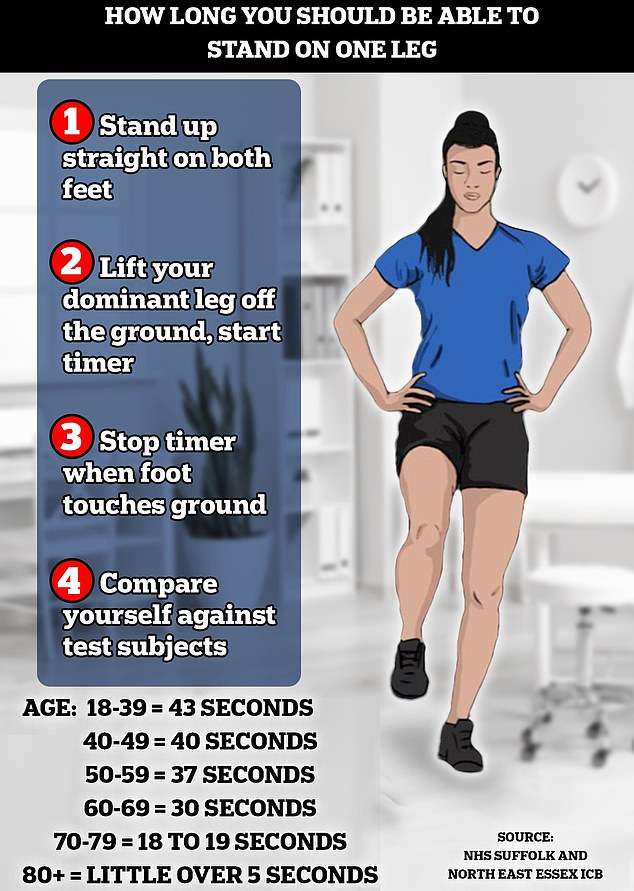
With their eyes wide open, the timer begins immediately after the foot loses contact with the ground.
The action ceases when the foot is lowered or when their hands come off their hips.
According to the NHS, individuals aged 18 to 39 ought to allocate around 43 seconds, whereas those between 40 and 49 should dedicate approximately 40 seconds.
For individuals aged between 50 and 59, the duration is 37 seconds, and for those aged from 60 to 69, it is 30 seconds.
By ages 70 to 79, this decreases to between 18 and 19 seconds. just slightly more than five seconds if you're above 80 years old.
Selina Lim, Divisional Director for Integrated Pathways at the NHS East Suffolk and North Essex NHS Foundation Trust, stated: "Research indicates that individuals having difficulty maintaining their balance for an adequate period are more likely to encounter health issues as they grow older."
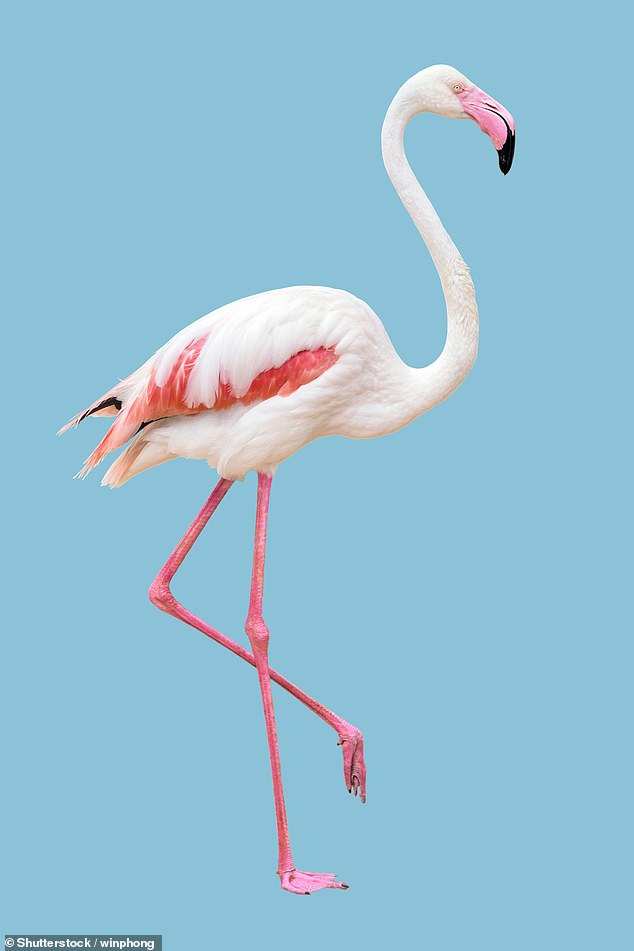
'Participants in the 'flamingo challenge' can swiftly and simply determine their own level of risk.'
'If so, there are numerous varied activities they can participate in to enhance their general fitness levels.'
A 2022 observational study indicates that failing to balance on one leg for 10 seconds during middle to late adulthood is associated with an almost twofold increase in the likelihood of dying from any cause over the subsequent decade.
Writing in the British Medical Journal of Sports Medicine , researchers who conducted the study over a period of 12 years Brazil , stated the test offers quick and unbiased insights for both patients and healthcare providers concerning static balance.
It additionally provides valuable data concerning mortality risks for middle-aged and older men and women.
Studies have consistently indicated that, unlike aerobic fitness and muscular strength or flexibility, balance typically remains relatively stable until individuals reach their 60s—after which it starts to decline.
Nevertheless, equilibrium assessments are typically omitted from routine health screenings for elderly individuals due to the absence of a standardized method to evaluate it.
Moreover, there is scarce information regarding the connection between balance and overall health, apart from the heightened probability of experiencing falls.
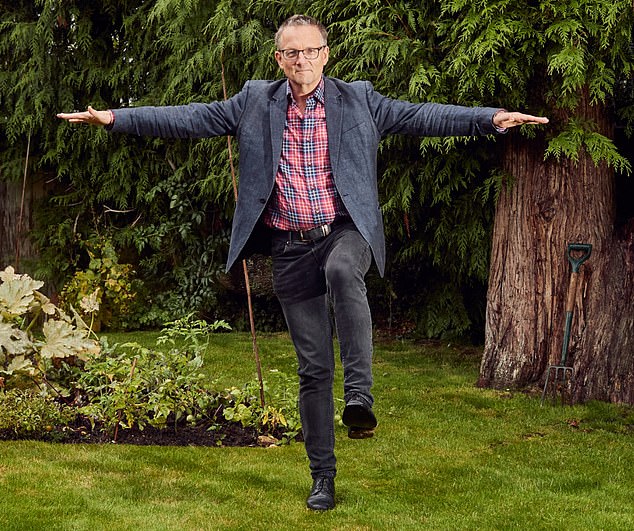
In 2019, the beloved television nutrition expert and Daily Mail columnist, who has passed away, Dr Michael Mosley advocated For improving balance on a single leg.
Mosley stated that if you can manage to keep your eyes closed for ten seconds, irrespective of your age, it indicates that you are likely in good health.
Last week, scientists from the Mayo Clinic based in the United States similarly uncovered The duration for which you can maintain your balance on a single foot reflects the strength of your bones, muscles, and nervous system. For every ten years of aging, an individual’s ability to stay balanced on their non-dominant foot decreases by approximately 2.2 seconds.
Therefore, if a person aged 50 could maintain their balance for 15 seconds, then a person aged 60 would be able to do so for approximately 12.8 seconds.
For the predominant leg, the duration they could maintain their stance decreased by 1.7 seconds each decade.
The research team indicated that this examination might be utilized in medical practices as a cost-effective, minimal-tech approach for assessing bone health and determining age-related changes.
Read more