In Japan's Alpine Villages, Timeless Architecture Stands Alone

Nestled deep within the Japanese mountain range lie the picturesque villages of Shirakawa-go and Gokayama, which house some of Japan’s most iconic architectural gems—thatched-roof houses featuring steeply pitched roofs engineered to endure the harshest weather conditions and test of time. treats you to a journey through these picturesque villages, recognized as UNESCO World Heritage Sites.
These mountainous villages in western Japan, located on the island of Honshu, serve as living embodiments of a significant era of Japanese countryside heritage and customs that continue to thrive. Here lies a chance to gain insight into an existence that coexists peacefully with nature.
In Shirakawa-go, roughly a hundred traditional homes have been preserved within the Japanese Alps.
Situated approximately 50 kilometers away from the city of Takayama in Gifu Prefecture, Shirakawa-go extends alongside the Sho River at the base of the mountains. Japanese Alps , surrounded by thick forests and verdant, thriving rice fields. These historic settlements, designated as a UNESCO World Heritage Site four decades ago, feature 114 homes. gasshō-zukuri Most of these structures remain inhabited today. Characterized by steeply pitched roofs that can incline up to 60 degrees, these traditional farmhouses are engineered to endure severe winter climates and substantial snow accumulation. Such pronounced angles facilitate the easy sliding off of snow, preventing structural failure due to excessive load. Constructed using locally sourced resources like cedar wood, rice straw, and Japanese hazel, this indigenous architectural style showcases both ingenuity and respect for nature’s forces. Houses typically have one side featuring a gabled roof oriented towards dominant wind directions, highlighting an astute comprehension of environmental factors and clever accommodation to regional weather patterns.
Ogimachi, a small village that serves as a testament to traditional Japanese countryside living from times gone by.
Ogimachi, a small village within Shirakawa-go home to approximately sixty residents, gasshō-zukuri homes, mostly dating from the 19th century th The village remains inhabited by 600 permanent residents today, offering an enchanting glimpse into traditional Japanese countryside living from times past. Each house features thatched roofs that undergo renewal every three decades through communal efforts. These homes stand beside irrigated rice paddies—especially picturesque during late spring evenings—and thriving kitchen gardens. It takes roughly ten minutes to walk from Ogimachi Castle to this area where you can observe how the buildings align along the riverbanks. This layout ensures proper airflow throughout the top levels of each structure; historically, these spaces were utilized primarily for silkworm cultivation.
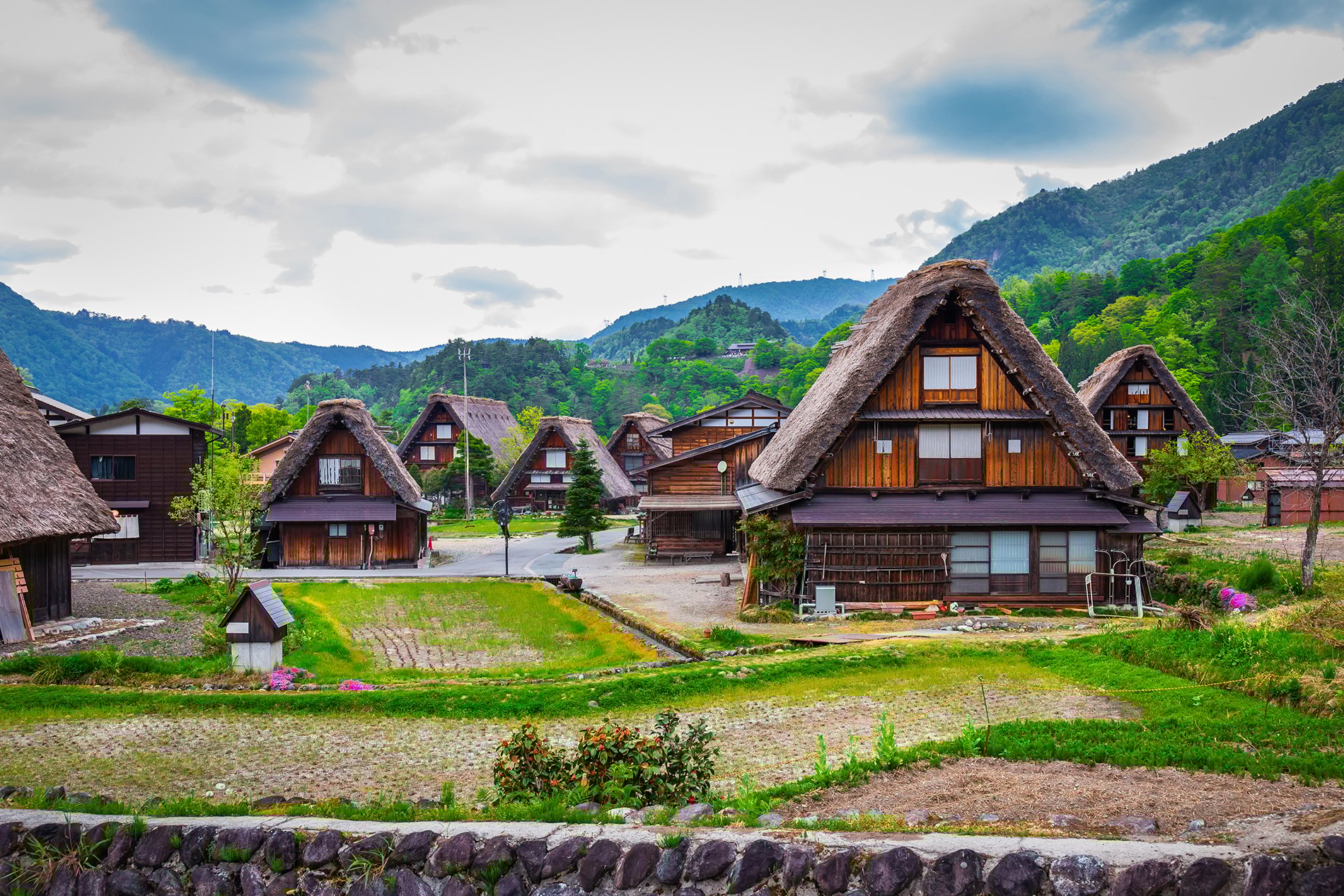
One of Ogimachi’s prized possessions is the Wada House, which distinguishes itself through both its grand scale and historical significance. Constructed circa 1800, this residence remains the biggest in the area. It has been continuously owned and lived in by descendants of the original Wada clan since then. This home serves as a testament to their forebears' prominence as gunpowder traders.
The interior features charred ceiling beams, illustrating how smoke was strategically employed to safeguard wooden elements and straw roofing against moisture and decay. Additionally, what was formerly utilized for raising silkworms now functions as a museum space exhibiting period-specific implements and apparatuses. These artifacts highlight architectural methods that eschewed metal fasteners such as nails or screws—permitting the framework to adapt elastically beneath heavy snowfall loads without succumbing to damage.
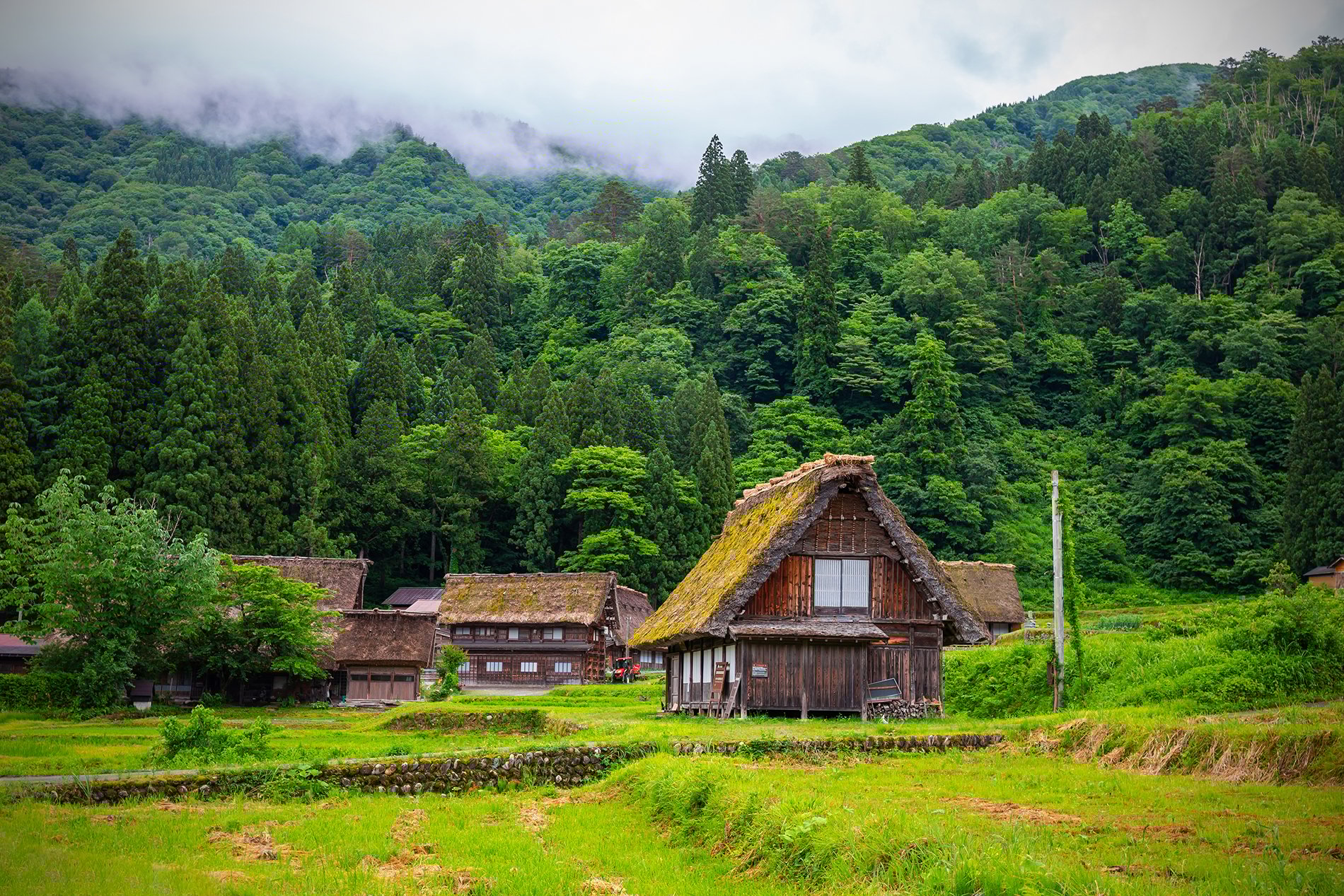
Gokayama, consisting of two remote villages recognized as UNESCO World Heritage sites
To the north lies Toyama Prefecture, home to Gokayama, where the villages of Ainokura and Suganuma can be found—both recognized as UNESCO World Heritage sites. Unlike the more accessible communities in Shirakawa-go, these secluded settlements provide just as enchanting an encounter. Perched high up on a hillside, the 23 homes in Ainokura stand out due to both their grand scale and remarkable condition; many date back over two-and-a-half centuries. In contrast, although Suganuma boasts fewer structures, they remain exceptionally well-preserved. As visitors meander through this cluster of around ten historic residences—which include several now serving as museums—they gain insight into enduring craftsmanship alongside glimpses into past residents’ lives. This destination is essential for enthusiasts of Japanese architectural traditions and cultural legacy!
Valuable suggestions for exploring Shirakawa-go and Gokayama
In Shirakawa-go, you can get to the village of Ogimachi via bus from Takayama (a distance of 50 kilometers) which takes roughly one and a half hours from the city center. Within this small settlement, several gasshō-zukuri lodgings function like conventional guest houses—we suggest making reservations a few weeks ahead of time. In Gokayama, the hamlets of Ainokura and Suganuma are somewhat remote yet can be reached by automobile or public bus during peak seasons from Takaoka (about 50 kilometers away) and Takayama (approximately 70 kilometers distant).