Frank Lloyd Wright's 6 Most Stunning Masterpieces to Explore Worldwide

Architecture molds spaces to improve life; only a handful of architects have achieved this with such brilliance as Frank Lloyd Wright. As an innovator in organic design, Wright indelibly stamped the 20th century through his relentless pursuit of balance among individuals, structures, and the natural world. Below are six of his creations that have transformed how we perceive residential living.
Wright, born in 1867 in the countryside of Wisconsin, was tireless visionary Who transformed contemporary architecture during an exceptionally productive career. He combined cutting-edge innovation with a pursuit of natural aesthetics. His ideology centered around crafting structures that harmoniously coexist with their surroundings, ensuring every component conveys a narrative of balance between humanity and nature. This mindset embodies his well-known adage: "Observe nature, appreciate nature, remain close to nature. You will find that nature always lives up to your expectations."
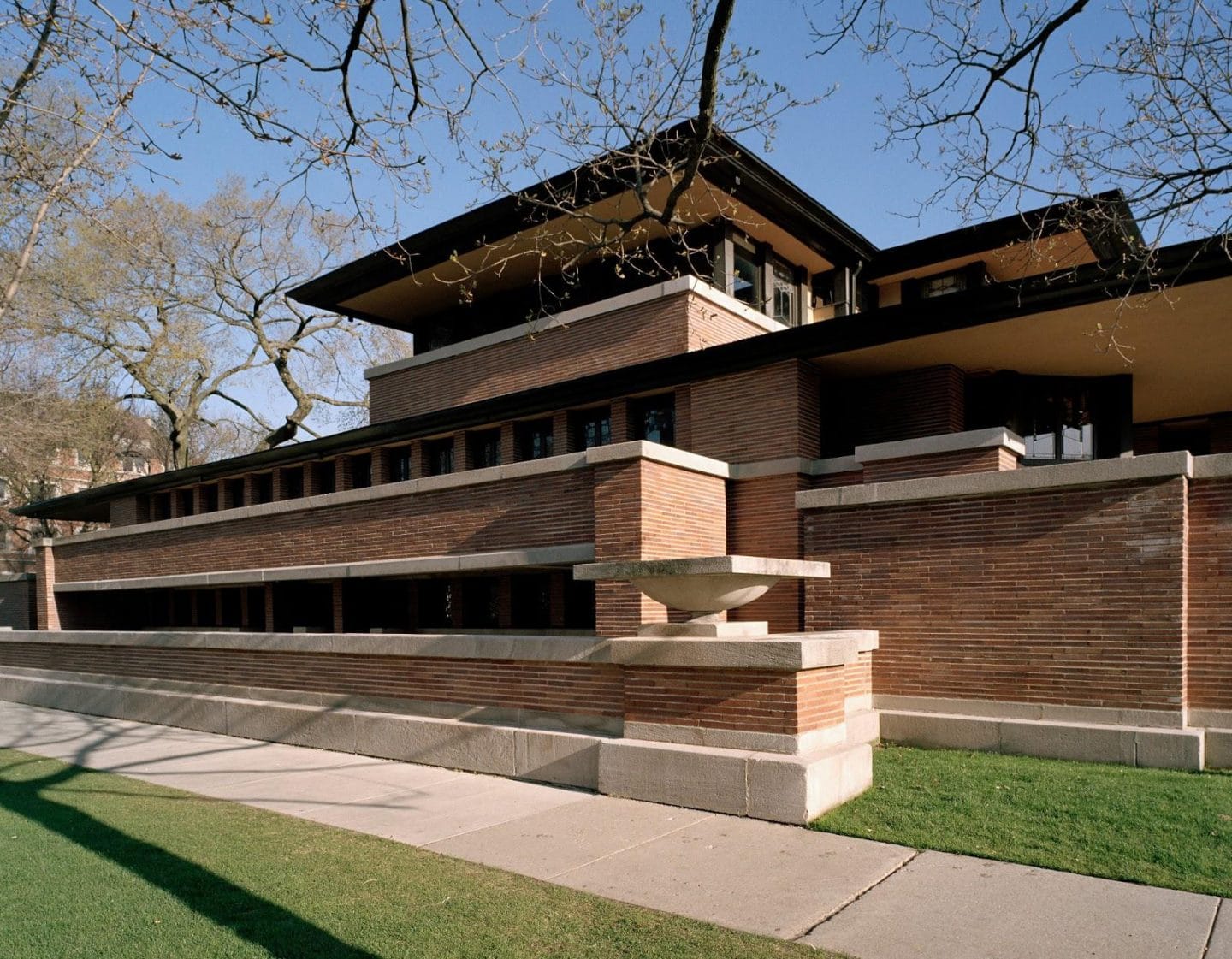
Robie House (1910): the small house on the plains
In Chicago, the Robie House stands as a testament to geometric abstraction. Widely regarded as the pinnacle of the Prairie style This dwelling, characterized by pronounced horizontal lines, appears to cradle the skyline. The projecting eaves, reminiscent of shielding feathers, create shadows upon the crimson brick facades. Inside, Wright composes an ensemble of continuous areas. Every item of furnishings and every colored pane of glass resonates with its environment, reinforcing his concept of genuine American architectural style, untainted by European aesthetics.
The Imperial Hotel in Tokyo (1923) serves as a link between Eastern and Western cultures.
In Tokyo, the Imperial Hotel observed an unforeseen meeting between Wright's brilliance and Japanese aesthetic sensibilities. This union was marked by geometric patterns derived from prints combined with a distinctly contemporary concrete design. The edifice further defied natural elements by enduring the significant seismic event of 1923. Though the initial construction has since been supplanted by newer architecture, its essence endures at the Meiji-mura museum. There, carefully conserved remnants stand as testaments to an innovative exchange of architectural ideas bridging Eastern and Western cultures.
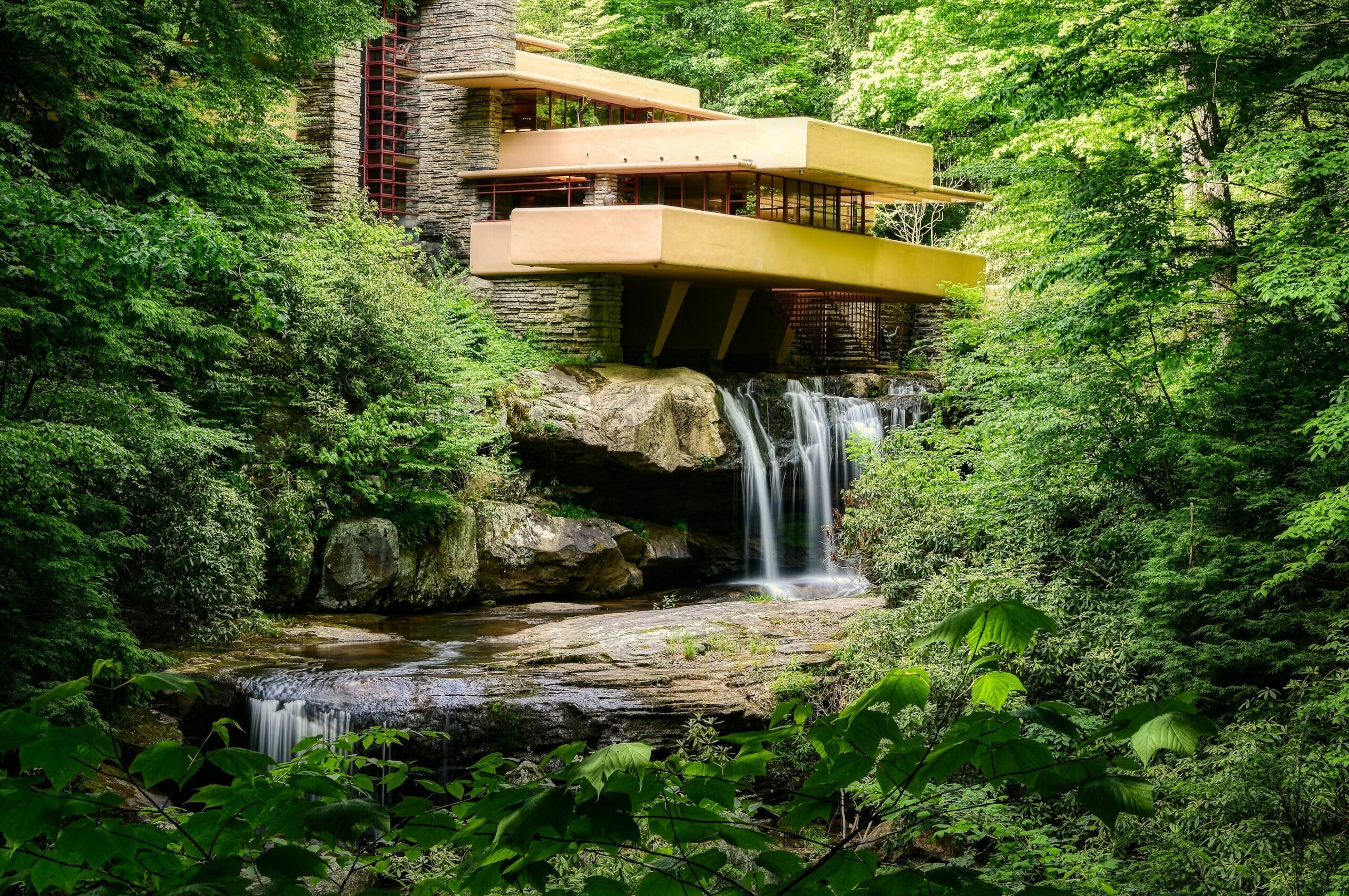
Fallingwater (1935): The Domesticated Waterfall
Located deep within Pennsylvania’s woodlands, Fallingwater perfectly embodies Frank Lloyd Wright's brilliance. Seemingly a natural outgrowth of the rocky terrain, this architectural marvel appears to emerge directly from the adjacent waterfall. With daringly cantilevered terraces that challenge conventional perceptions of balance, the dwelling gives the impression of floating mid-air. By incorporating native stones and untreated concrete, the design firmly anchors itself into its surroundings, while expansive glass walls dissolve the distinction between interior spaces and exterior views. Beyond being merely a home, Fallingwater stands as a tribute to the beauty of nature, earning recognition in 2019 with its addition to the UNESCO World Heritage list.
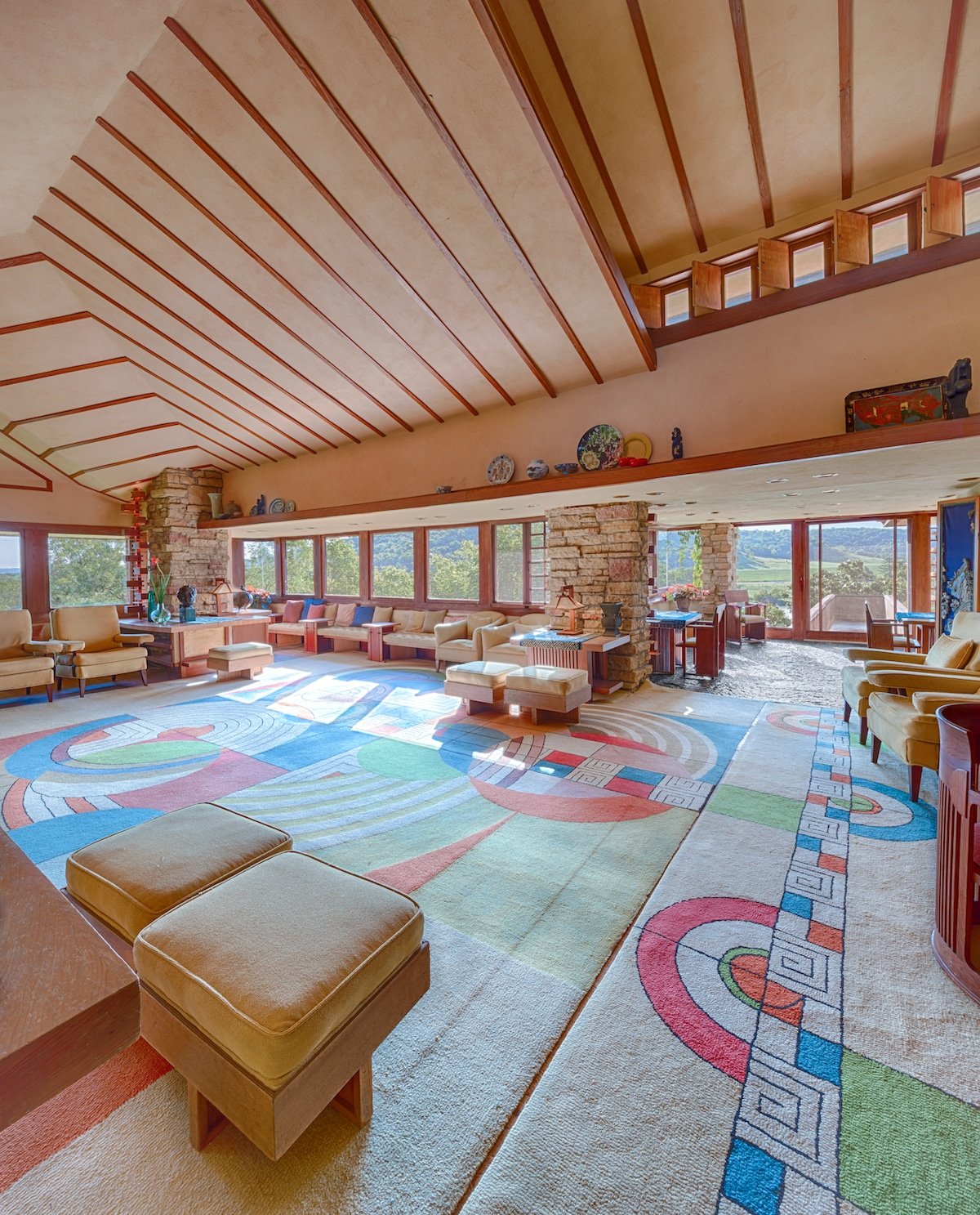
Taliesin West (1937) stands as an oasis amidst the desert.
Located on a mountainside in Arizona Taliesin West materializes as an ethereal blend of stone and timber. Serving both as a refuge for winters and as his architectural academy, this edifice stands as a homage to the arid terrain. Wright envisioned Taliesin West as a "utopian retreat" amidst the desert, featuring modest structures crafted to echo the vastness of the scenery. By predominantly employing indigenous resources like desert rocks and sands, Wright fashioned a building that appears to organically emerge from its environs. It serves as a dynamic tutorial on harmonious coexistence with even the harshest natural conditions.
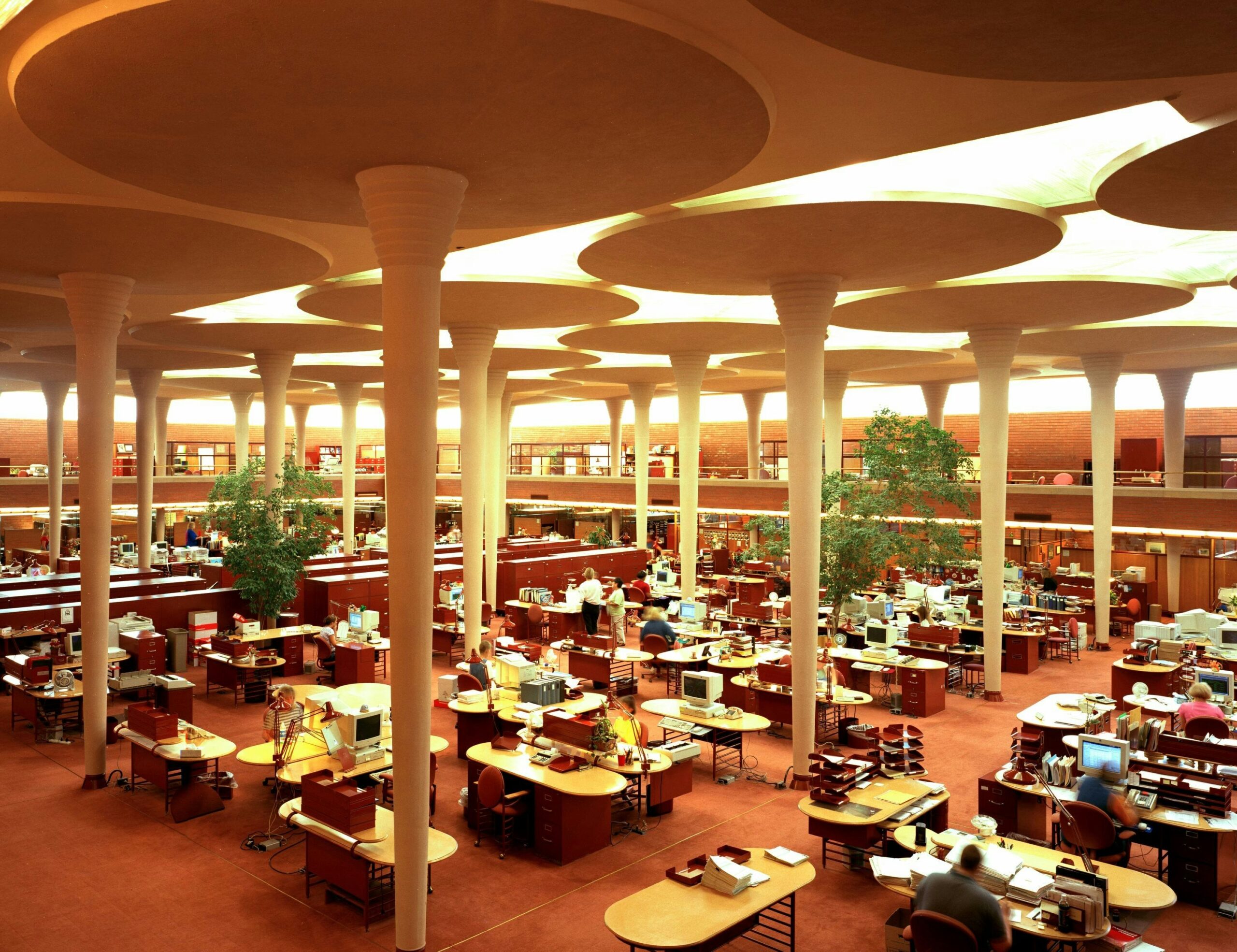
The Johnson Wax headquarters from 1939: a sanctuary of modern work
In Racine, Wisconsin, Wright revolutionized the office environment at the Johnson Wax building. This innovative space, bolstered by sleek, column-like supports shaped like mushrooms, was crafted as a modern-day sanctuary focused on enhancing productivity and comfort. Natural light permeated the area via numerous Pyrex tubes, casting a gentle and consistent glow throughout. Completing his design in 1944 with an adjoining research tower, Wright established a structure that stands as a paradigm of humane corporate architectural principles even today.
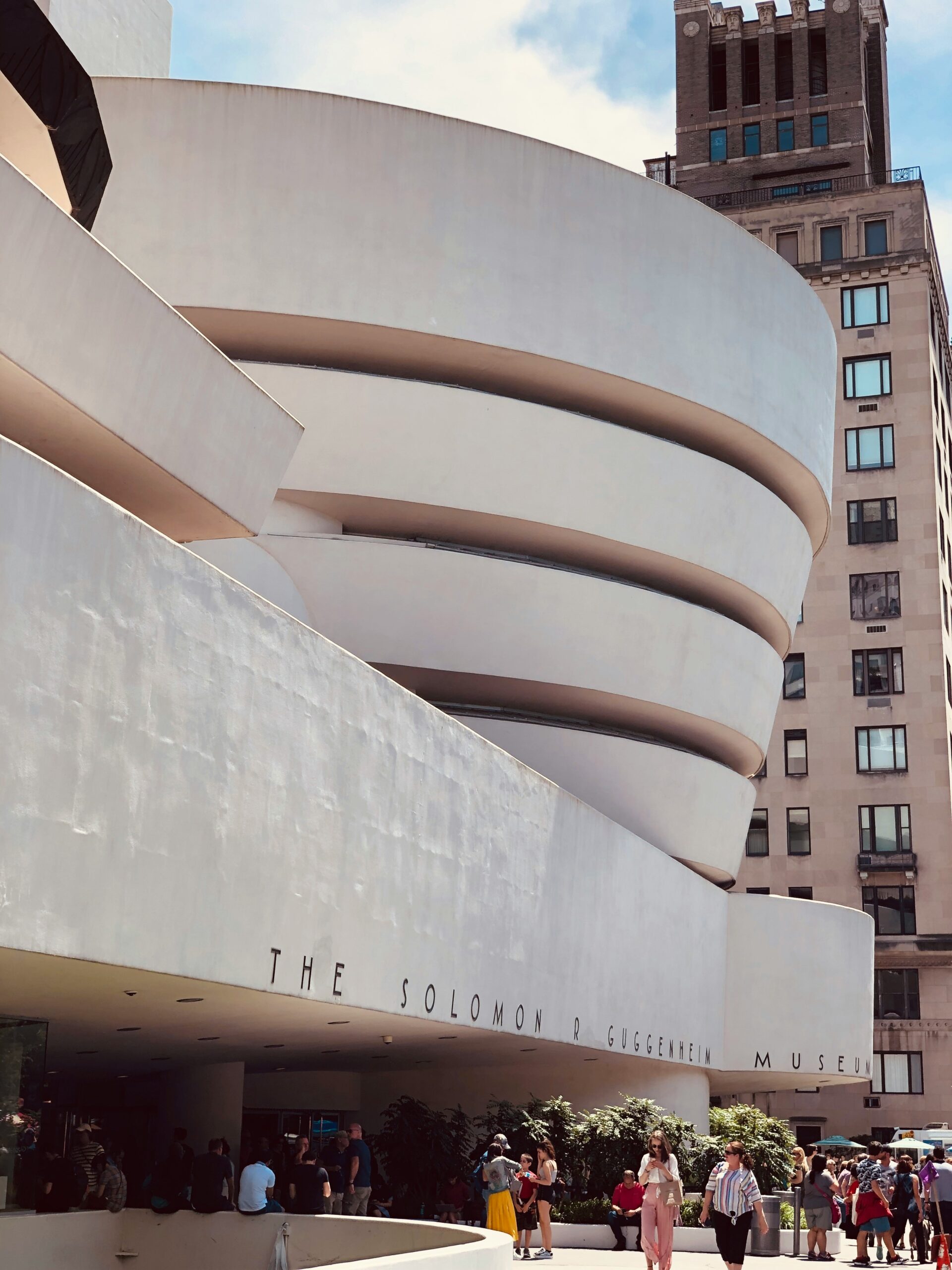
The Guggenheim Museum (1959): A Spiral That Defies Manhattan
In the towering urban jungle of New York, the Guggenheim Museum It stands out like an architectural enigma. The spiraling white structure, which took 16 years to materialize, defies the linear high-rises along 5th Avenue. Within, the winding ramp turns the tour into an architectural stroll where art and space blend in a stunning dance. Beyond being merely a museum, the Guggenheim represents a cultural upheaval cast in stone. Sadly, Wright did not live to see his magnum opus finished; he passed away mere months prior to its opening, bequeathing an exceptional piece of architecture to posterity.