Waqf Bill Challenges Country's Secular Roots: DMK

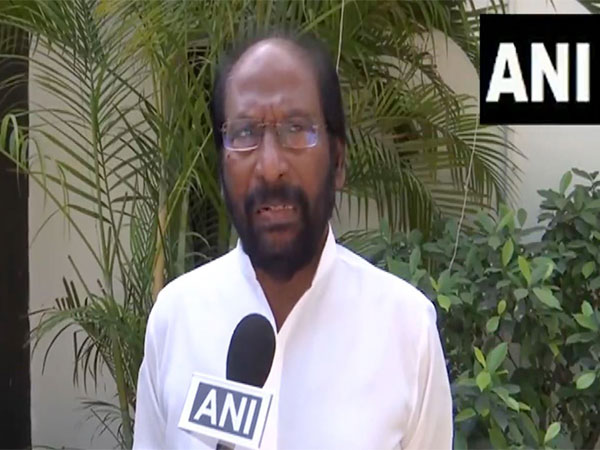
New Delhi [India], April 2 (ANI): On Wednesday, DMK member of parliament Tiruchi Siva expressed robust opposition opposition Regarding the Waqf Amendment Bill, he stated that his party strongly disagrees with it because the suggested law brings up issues related to the nation's secular foundation.
This is an important bill that once again puts the issue of secularism in our nation to the test. The DMK opposes this bill, and our leaders have clearly stated this position. Yesterday, all the opposition The parties opted to oppose the bill. Since they hold a majority in the Lok Sabha, the BJP consistently pushes through legislation in their preferred way," Tiruchi Siva said to ANI.
DMK member of parliament Kanimozhi talked to ANI and stated, “The DMK is against it. Our Chief Minister, MK Stalin, has introduced a resolution in the Tamil Nadu Legislative Assembly. We won’t abandon the minorities of our nation. The INDIA coalition remains united in opposition to this bill.”
In the meantime, Chandra Shekhar Azad from the Aazad Samaj Party also condemned the Waqf Bill, describing it as an assault on the religious liberty of Muslims.
Protesting against the legislation, Azad stated, "At this moment, the vulnerable community is observing which individuals stand beside them and who aims to gain political leverage from their situation. The measure threatens the religious liberty of Muslims. Furthermore, it represents the government’s strategy to seize assets belonging to Waqf institutions."
Calling upon the opposition Members should consider "changing their stance" and back the Waqf (Amendment) Bill, 2025, according to Minority Affairs Minister Kiren Rijiju. He stated that the Joint Parliamentary Committee, which reviewed the bill, conducted extremely thorough deliberations, and this level of broad consultation regarding the legislation has never taken place before. parliament ary history of India.
Introducing the Waqf (Amendment) Bill, 2025, for discussion and passage in the Lok Sabha, Rijiju stated that the legislation would not have retroactive implementation and refuted claims suggesting it seeks to seize properties.
Rijiju additionally presented the Mussalman Wakf (Abolition) Bill, 2024, for discussion and approval in the Lok Sabha.
I would like to point out that the debate surrounding the Waqf Amendment Bill in the joint committee comprising both legislative chambers has never occurred before. parliament So far, Indian history has been shaped up until today. I extend my gratitude and congratulations to all the Joint Committee members...Up to this point, a total of 284 delegations from various communities have shared their perspectives and recommendations with the committee. Additionally, the waqf boards from 25 state governments and union territories have submitted their contributions," stated Rijiju.
He mentioned that 97.27 lakh applications were submitted regarding the bill, which was proposed in August of the previous year and reviewed by the Joint Parliamentary Committee (JPC). The minister dismissed these concerns. opposition Members claimed that the bill was unconstitutional and stated that the Centre did not acquire any extra powers via the legislation.
Previously, Congress politician KC Venugopal charged that the administration was attempting to rush through the legislation, stating that sufficient time had not been provided for them to propose their modifications.
He mentioned, 'You're rushing through the legislation; you must allocate time for revisions. There isn’t enough time for those revisions,' he stated.
Speaker Om Birla mentioned that he gave balanced attention to both the government’s proposed amendments and the opposition members.
In response to objections raised by RSP’s NK Premachandran about the government's procedures concerning the bill, Home Minister Amit Shah stated that the Union Cabinet had endorsed the amendments included in the legislation.
"It was your ( opposition He emphasized that a Joint Parliamentary Committee should be established. Unlike Congress, we don’t have committees that dictate terms; instead, we have democratic panels that engage in brainstorming sessions. As they say, ‘In Congress times, there were committees that enforced decisions.’ Our committees discuss and deliberate based on these conversations, making necessary adjustments. If modifications aren't deemed acceptable, then forming such a committee would serve no purpose. He concluded by stating there was no point of order,” he added.
Earlier, Rijiju informed the press that the legislation is beneficial for the nation.
The legislation was previously introduced in the Lok Sabha in August of the previous year, and a Joint Parliamentary Committee, led by BJP member Jagdambika Pal, reviewed it.
This legislation proposes changes to the 1995 Act with the intention of enhancing the governance and oversight of waqf properties within India. The objective is to address the limitations present in earlier versions of the law and boost the effectiveness of Waqf boards. This includes refining the registration procedures as well as amplifying the use of technological solutions for handling waqf documentation. (ANI)