Dive Into Wonder: The World's Tallest Cathedral—a Hidden Gem Worth the Journey

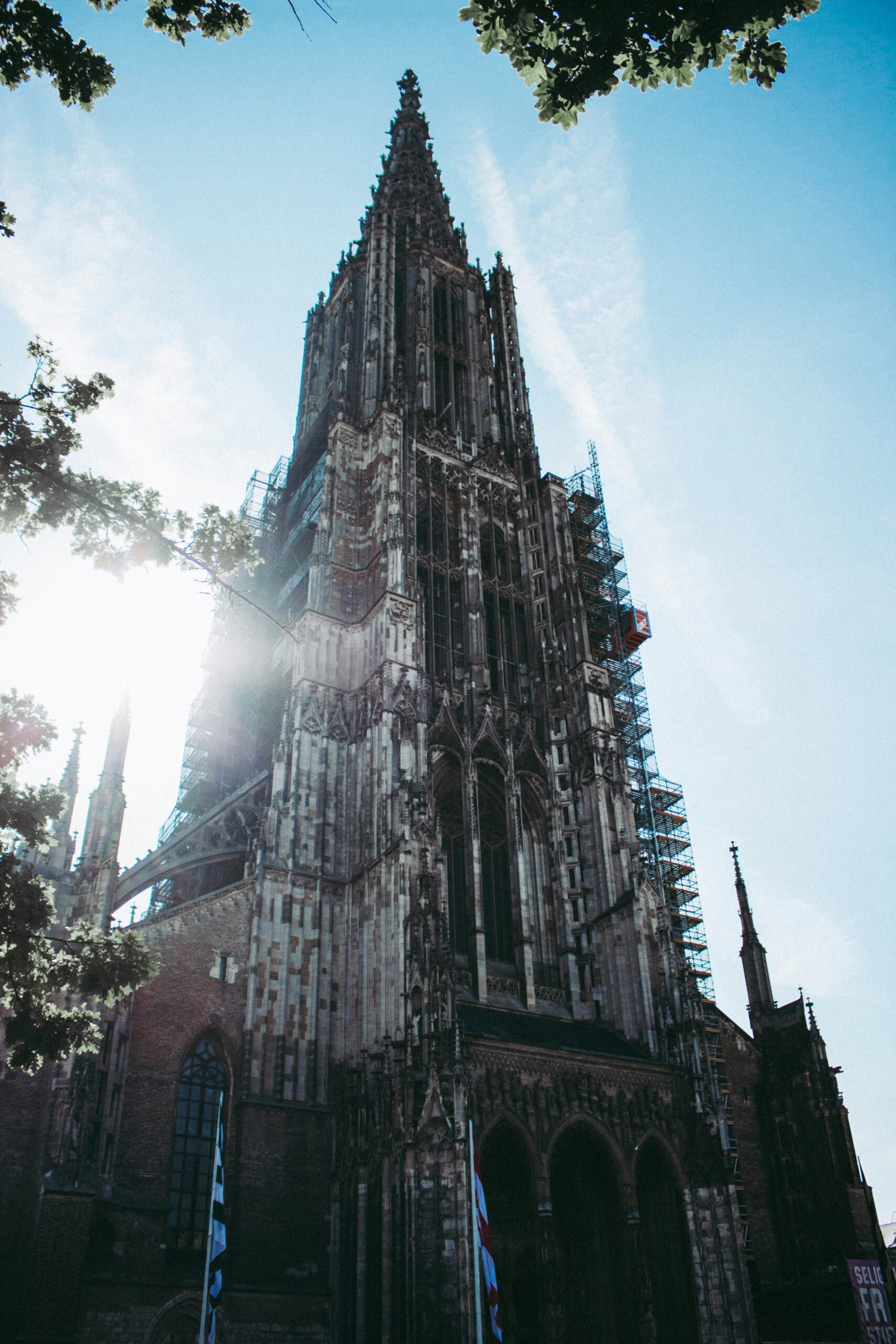
Boasting a towering spire measuring 161 meters, the Ulm Minster in Germany stands as the world’s tallest church. This remarkable example of Gothic architecture draws tourists globally. Let's delve into the rich history of this iconic German landmark.
For many centuries, the Ulm Cathedral (known as Ulmer Münster in German) has served as the iconic representation of the city and a testament to the former greatness of the German Empire. The construction commenced in 1377 when Ulm held the status of an imperial city. This magnificent structure gained prominence primarily due to its bell tower, soaring to a height of 161.53 meters, a feat accomplished only in 1890.
Visiting Germany? Here are some pieces to assist you with planning out your trip:
- 5 Enchanted Forests to Discover in Germany
- The top 5 romantic spots to visit in Germany
- 5 stunning castles to explore in Germany
The Ulm Cathedral, an oft-overlooked landmark
In the region of Baden-Württemberg in southern Germany, Ulm stands out as a charming town worthy of exploration! Situated along the Danube River, this quaint locale is renowned for its lush Black Forest, picturesque little canals, and historical buildings which juxtapose strikingly against newer constructions. Additionally, Ulm boasts a prominent Protestant church featuring what is recognized as the world’s tallest steeple. This iconic structure was completed towards the close of the 19th century. th In the course of several centuries since its completion, this massive tower dominates the entire town! Visitors have the option to ascend the 768 stairs to reach the viewing deck situated at an impressive height of 143 meters, from where they can relish the sweeping vista of the city and the Danube River below.
Nevertheless, the Ulm Minster fails to share the same level of renown as some of its European peers like the 108-meter-tall Duomo in Milan, the 132-meter-tall St. Peter’s Basilica in Rome, and the Notre-Dame Cathedral In Paris, boasting a towering 96-meter spire, this church sits on Münsterplatz (cathedral square). After the Reformation, it became a Protestant place of worship. It contrasts sharply with the predominantly modern architectural style of the surrounding city.
Time for some history!
In 1377, the task of building Ulm Cathedral was assigned to Heinrich Parler, a renowned German architect. After his death in 1387, his descendants took over and carried forward the project. The initial design conceived by Heinrich included two side aisles. However, during the next hundred years, several modifications were implemented altering these blueprints. Plans for an additional aisle emerged; yet, in 1543—amidst the rapid spread of church reforms across Europe—the construction halted abruptly.
The construction of the cathedral remained paused for three hundred years until it resumed in 1844. By 1890, the impressive 161-meter tall bell tower had been finished, claiming the title of the world's tallest at that time. Each of the cathedral’s other two towers stands at an equally notable height of 86 meters.
The cathedral also stands out due to its expansive space. Spanning 123 meters in length and 49 meters in width, it has the capacity for up to 20,000 individuals. The interior is embellished with numerous Gothic-style stained-glass windows, several of which date back unchanged to medieval times. They illustrate images such as the Virgin Mary alongside her mother, St. Anne, episodes from Jesus' birth, depictions of Christ, among others. Throughout the Second World War, this structure managed to evade destruction despite extensive bombings carried out by Allied forces that devastated much of the surrounding city. Nonetheless, certain stained-glass panels added during the nineteenth century did not survive; they were substituted instead with simple panes of clear glass.