South Korea's Growth Dips: $40,000 GDP Milestone Pushed to 2029

South Korea's ascent in the global economy is beginning to slow down. According to the International Monetary Fund’s recent projections, the nation will not reach a per capita GDP of $40,000 until 2029—two years behind earlier predictions. This delay can be attributed to factors such as diminishing growth rates, political unrest, and a depreciating currency, which collectively hinder the country's progress.
Six months prior, the IMF forecasted that South Korea would achieve a per capita GDP of $40,000 by 2027. However, weakened economic momentum and ongoing structural issues have pushed this projection back. According to the IMF's April 22 World Economic Outlook report, South Korea’s per capita GDP is now expected to hit $40,341 in 2029—a span of 15 years since surpassing $30,000 in 2014. By comparison, most developed nations accomplished this transition within roughly half that time frame.
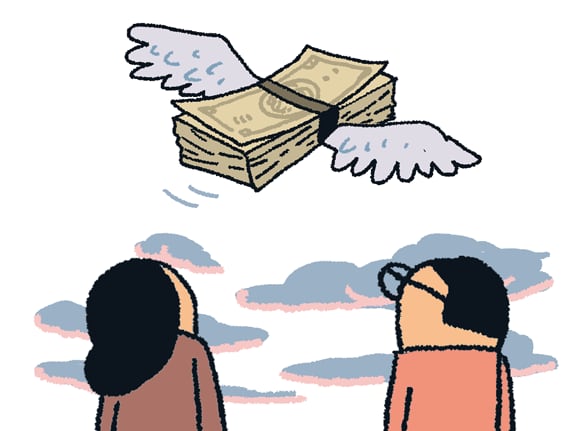
Partly responsible for this decline is the weakened currency, which has depreciated by almost 10% compared to the US dollar in just half a year. However, more fundamental problems persist. The South Korean economy—previously driven by innovative sectors—is now experiencing stasis. Its exports face challenges due to increasing worldwide trade barriers, and domestically, fresh sources of economic momentum have not emerged successfully.
When semiconductors emerged as a key national sector, there was a tangible excitement about our ability to compete globally," remarked Lee Yoon-soo, an economics professor at Sogang University. "However, now with these emerging sectors, many believe that only the U.S. has what it takes to be at the forefront.

The information shows a deceleration. Following the achievement of a per capita GDP exceeding $10,000 in 1994, South Korea took only 11 years to reach $20,000 and an additional nine years to attain $30,000. However, advancements have since come to a halt. The growth rate dropped from approximately 4% as it moved past the $20,000 mark up until reaching $30,000, declining further to about 2% thereafter, which extended the timeline for achieving subsequent milestones almost tenfold.
Experts argue that the nation's export lineup—predominantly composed of semiconductors and cars—has remained largely unchanged over two decades. "With the exception of semiconductors, South Korea's major sectors are leftovers from the heavy chemicals industry boom of the 1960s and '70s," stated Professor Ahn Dong-hyun from Seoul National University.
Experts contend that South Korea needs to allocate scarce resources towards emerging sectors like artificial intelligence and biotechnology to prevent lagging behind. "Contemporary youth aren't attracted to conventional manufacturing roles; however, they're keen on joining smaller AI start-ups despite potentially reduced compensation, since they envision a promising future in this field," stated Professor Kim Sang-bong from Hansung University.
The risks involved are significant. Driven by constant innovation, the United States reached a GDP of more than $40,000 approximately seven years following its achievement of $30,000, and currently stands at the forefront globally with an average individual income exceeding $80,000. In order to maintain its growth trajectory, Britain shifted focus towards financial services and sectors based on knowledge creation. Following a challenging phase post reunification, Germany implemented extensive changes which allowed it to exceed the mark of $40,000 in 2007.
The alternate scenario is illustrated by Japan’s cautionary story. Having been the premier large-scale economy to surpass the $30,000 and $40,000 thresholds around the early 1990s, Japan plunged into years of economic sluggishness. Analysts suggest that South Korea might encounter a comparable destiny unless it undergoes significant restructuring.
"If South Korea doesn’t spur industrial innovation and dismantle strong unions and established industries, it could gradually decline similar to Japan," warned Kim Jung-sik, a retired professor from Yonsei University.